A commercial popcorn machine is designed for repeated use in cinemas, snack shops, concession stands, and food service businesses. However, even a well-maintained machine can develop problems such as uneven popping, burnt popcorn, unpopped kernels, heating failures, or popcorn that loses its crispness.
Most common commercial popcorn machine problems can be traced to ingredient quality, operating procedures, residue buildup, worn components, or unsuitable equipment capacity. Identifying the actual cause before making adjustments helps operators reduce waste, maintain consistent popcorn quality, and avoid unnecessary downtime.
XFD Popcorn provides professional popcorn equipment for commercial venues and industrial production. This guide explains how to troubleshoot common popcorn machine problems, prevent recurring faults, and determine when a different machine configuration may be more suitable.
Why Does a Commercial Popcorn Machine Have Problems?
Most operating problems occur when heating, ingredients, agitation, and cleaning are not properly balanced. A machine may appear to have a heating problem when the actual cause is an incorrect batch size, poor-quality kernels, or residue affecting normal operation.
Before troubleshooting, check the manufacturer's operating instructions, confirm that the ingredients meet the recommended specifications, and inspect the equipment for visible residue or damage. Always disconnect the power supply before cleaning or inspecting internal components.
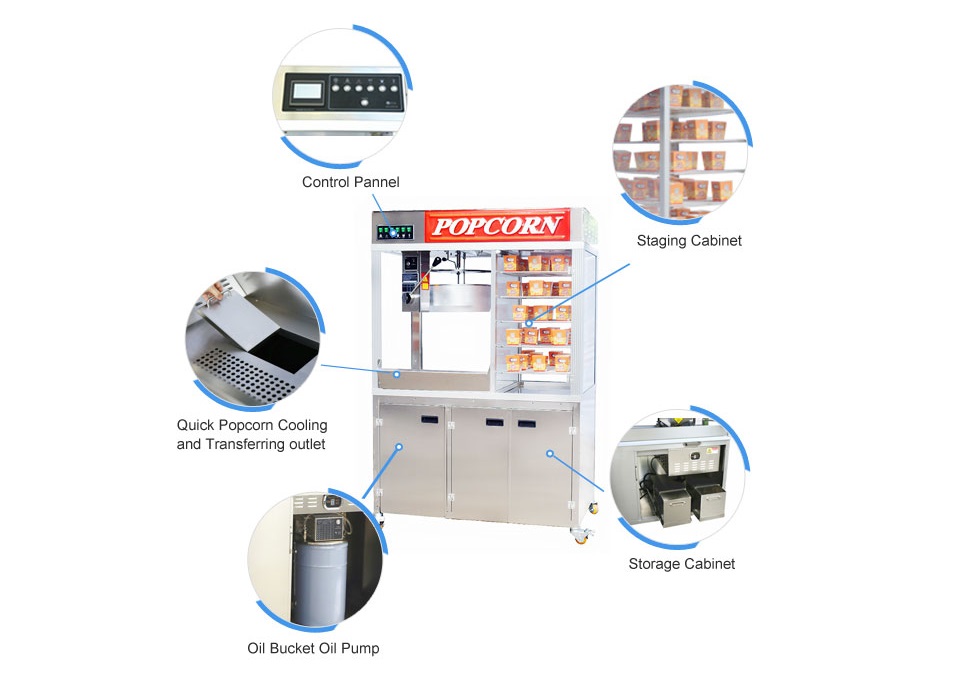
Equipment selection also matters. XFD offers commercial popcorn machines for snack shops, concession stands, and other commercial applications. Choosing equipment according to batch size and expected demand can help reduce operational bottlenecks.
Why Is the Popcorn Machine Not Heating Up?
Quick answer: A popcorn machine that does not heat up may have a power supply problem, a tripped circuit breaker, a faulty heating element, a control issue, or a damaged electrical connection.
Start by checking the external power connection and confirming that the machine is connected to the voltage specified by the manufacturer. Check the operating switches and controls, and look for any visible warning indicators.
If the machine receives power but the kettle remains cold, the heating system or temperature controller may require professional inspection. If the machine repeatedly trips the circuit breaker, shuts down unexpectedly, or heats intermittently, stop using it until the fault has been identified.
For cinema operators evaluating replacement equipment, XFD's cinema popcorn machines offer options for different operating requirements. Compare kettle capacity, heating technology, electrical specifications, and expected production volume before choosing a replacement.
Why Does Popcorn Burn in a Commercial Popcorn Machine?
Quick answer: Burnt popcorn is commonly caused by excessive heating, delayed unloading, accumulated food residue, or an unsuitable combination of kernels, oil, and sugar.
First, check whether the batch size and ingredient quantities follow the manufacturer's recommendations. Overloading the kettle can affect heat distribution and stirring, while unsuitable ingredients may contribute to scorching or inconsistent flavor.
Next, observe the popping cycle. If popping slows significantly but the batch remains in the kettle, some kernels may continue heating after most of the popcorn is ready. Follow the recommended operating procedure to determine when the batch should be unloaded.
After the kettle has cooled and the power supply has been isolated, remove accumulated oil and carbonized food residue using the approved cleaning method. Never pour water onto a hot kettle or immerse electrical assemblies in water.
For businesses producing caramel or chocolate popcorn, the coating process requires particular attention to temperature and residue control. XFD's industrial popcorn cooker and coater is designed for factory-scale caramel and other flavored popcorn production. Separating popping and coating operations where appropriate can make process control easier.
Why Are Too Many Popcorn Kernels Left Unpopped?
Quick answer: Excessive unpopped kernels often indicate unsuitable kernel moisture, inconsistent ingredient quality, an incorrect batch formula, or insufficient and uneven heating.
Popcorn kernels need sufficient internal moisture to build steam pressure and expand. Kernels that are too dry, damaged, or poorly stored may fail to pop properly even when the machine is functioning normally.
To troubleshoot the problem, follow these steps:
- Check kernel quality and storage conditions.
- Use the recommended ingredient quantities for the specific kettle size.
- Allow the machine to reach its specified operating conditions before loading the batch.
- Compare several batches to determine whether the problem is consistent.
- Arrange a technical inspection if the problem continues despite suitable ingredients and correct operating procedures.
For high-volume production, consistent popping performance is essential to reducing waste and maintaining output. XFD's industrial popcorn production equipment is designed for larger manufacturing requirements. Buyers should evaluate ingredient specifications, production targets, and the complete processing workflow before selecting a system.
Why Does Popcorn Stick to the Kettle?
Quick answer: Popcorn may stick to the kettle because of accumulated sugar or oil residue, incorrect ingredient proportions, insufficient stirring, or inadequate cleaning.
This problem is especially common when making caramel popcorn and other sweet varieties. Sugar can adhere to a hot surface and become increasingly difficult to remove when residue accumulates over multiple batches.
Use the recommended recipe and batch size for the machine. If the equipment has an agitator, confirm that it operates according to the manufacturer's instructions. A damaged or malfunctioning stirring mechanism should be inspected rather than ignored.
Once production is complete, follow the recommended cleaning procedure. Avoid scraping a hot kettle aggressively with unsuitable tools, as this may damage the surface. Persistent sticking may indicate that the heating system, agitator, or ingredient formula needs further inspection.
For businesses producing coated popcorn at scale, XFD's popcorn production and coating line combines equipment for popcorn production and flavor coating. The appropriate configuration depends on the recipe, production volume, and level of automation required.
Why Is Commercial Popcorn Chewy Instead of Crispy?
Quick answer: Popcorn usually becomes chewy when it absorbs moisture from the surrounding air, is packaged before cooling sufficiently, or remains in unsuitable holding conditions for too long.
Freshly popped popcorn releases heat and moisture. If it is sealed in unsuitable packaging while still hot, condensation may soften the product and reduce its crispness.
Allow the popcorn to cool appropriately before packaging, choose packaging with suitable moisture-barrier properties, and avoid leaving finished popcorn exposed to humid air for extended periods.
For cinemas and concession stands, holding conditions also affect product quality. A staging cabinet should be selected and operated according to its intended use. Excessive heat or unnecessarily long holding times can affect flavor and texture.

Businesses serving popcorn throughout the day can explore XFD's popcorn equipment range when evaluating production and holding requirements. The appropriate solution depends on serving volume, the expected holding period, and the operating environment.
Why Is the Popcorn Machine Making Unusual Noises?
Quick answer: Grinding, rattling, or excessive vibration may indicate loose components, an obstructed agitator, worn moving parts, or a mechanical fault.
Turn off the machine and allow hot components to cool before inspecting accessible areas. Check for loose external parts, accumulated debris, or visible obstructions. Never reach into a moving agitator or attempt to remove an obstruction while the machine is powered.
If the sound comes from the motor, drive mechanism, or an internal assembly, arrange an inspection by a qualified technician. Continuing to operate equipment with an unresolved mechanical fault may lead to further damage.
For commercial operations, routine inspection and cleaning are more practical than waiting for a machine to fail during peak service. Record recurring noises, operating conditions, and changes in popping performance to help technicians identify the cause.
Why Does the Machine Produce Popcorn Too Slowly?
Quick answer: Slow production may result from a long heating cycle, inconsistent ingredient loading, cleaning interruptions, equipment faults, or insufficient capacity for peak demand.
Determine whether the problem affects each batch or only occurs during busy periods. If the popping cycle itself has become longer, investigate heating performance, ingredients, and operating procedures. If each batch is normal but customers still wait too long, the machine may not have enough capacity for the required output.
For cinemas, stadiums, and busy snack shops, equipment selection should account for peak-hour demand rather than average daily sales alone. Kettle capacity, batch cycle time, the number of kettles, staffing, and finished-popcorn holding capacity all influence service performance.
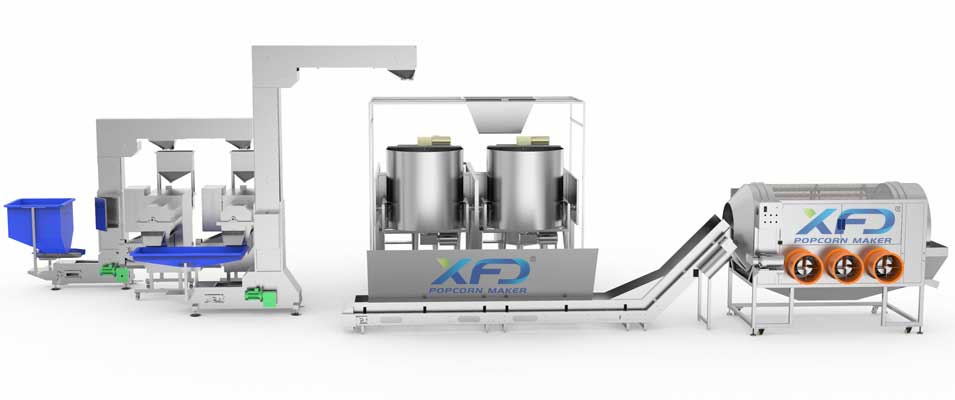
For factory-scale manufacturing, XFD's industrial popcorn machines and production systems offer options for higher-volume production. For concession businesses, a suitable commercial or cinema machine may be more appropriate than a full production line.
How Can Businesses Prevent Common Popcorn Machine Problems?
Preventive maintenance helps commercial popcorn operators reduce unexpected downtime and maintain consistent product quality. A practical routine should cover cleaning, ingredient control, operating checks, and periodic technical inspection.
- Clean the machine regularly: Remove oil, seasoning, and sugar residue according to the manufacturer's instructions.
- Use consistent ingredients: Store kernels properly and follow the recommended recipe and batch size.
- Monitor every batch: Watch for changes in popping time, yield, color, aroma, and texture.
- Inspect heating and moving components: Address unusual sounds, intermittent heating, or repeated electrical faults promptly.
- Train operators: Ensure staff understand safe startup, operation, unloading, shutdown, and cleaning procedures.
- Match equipment to production needs: Reassess capacity when customer traffic or manufacturing volume increases.
Businesses moving from small-batch popping to packaged popcorn manufacturing may need additional equipment for coating, cooling, conveying, and packaging. XFD's industrial popcorn equipment supports different production configurations, depending on the target output and product requirements.
When Should You Repair or Replace a Commercial Popcorn Machine?
Repair is generally worth considering when the fault is isolated, replacement parts are available, and reliable operation can be restored safely. Replacement may be more practical when faults recur, maintenance causes frequent downtime, or production capacity no longer meets business needs.
Before making a decision, compare repair costs, equipment age, spare-parts availability, energy use, downtime, and the cost of lost production. A machine that still works but cannot meet peak demand may have a capacity problem rather than a mechanical problem.
XFD supplies equipment for different business scales, from commercial popcorn machines for retail and concession settings to industrial popcorn production systems for larger manufacturing operations. Reviewing actual operating requirements helps businesses choose equipment that fits their workflow.
Frequently Asked Questions About Commercial Popcorn Machine Problems
Why is my commercial popcorn machine not popping all the kernels?
Common causes include unsuitable kernel moisture, inconsistent ingredient quality, incorrect batch quantities, and insufficient or uneven heating. Check the ingredients and operating procedure first. If the problem persists, have the heating system inspected.
How do I stop popcorn from burning in a commercial popcorn machine?
Use the recommended ingredient quantities, follow the correct popping cycle, unload the batch at the appropriate time, and clean accumulated residue after the kettle has cooled. For caramel popcorn, check whether sugar buildup or the recipe is contributing to scorching.
Why does my popcorn turn soft after popping?
Popcorn commonly loses crispness because it absorbs moisture from the air or is packaged before it has cooled sufficiently. Review cooling, holding, and packaging conditions, especially in humid environments.
How often should a commercial popcorn machine be cleaned?
Follow the manufacturer's cleaning instructions and adjust the routine according to usage. High-volume machines may require daily cleaning and more frequent removal of ingredient residue during intensive production.
When should I replace a commercial popcorn machine?
Consider replacement when repairs become frequent or uneconomical, reliable operation cannot be restored, spare parts are difficult to obtain, or the machine no longer meets peak production requirements.
What type of popcorn machine is suitable for a high-volume business?
The right choice depends on whether popcorn is prepared for immediate customer service or manufactured at factory scale. Commercial and cinema machines suit many concession operations, while industrial popping and coating systems may be more appropriate for large-scale production.
How can I choose the right popcorn equipment for my business?
Evaluate peak output, batch capacity, heating technology, product types, labor requirements, available space, cleaning needs, and future production plans. XFD offers commercial, cinema, and industrial popcorn equipment for different operating requirements.
For equipment selection or troubleshooting support, contact XFD Popcorn with the machine model, a description of the fault, and the operating conditions. These details can help narrow down the likely cause and identify an appropriate next step.