How do you match popcorn popping, coating, and packaging equipment to build a balanced production line? The key is to make sure each stage can handle the actual output of the previous stage without creating long waiting times, product accumulation, or unnecessary downtime.
For popcorn manufacturers, buying a high-capacity popping machine is only part of the decision. If the coating machine cannot process popcorn quickly enough, or the packaging machine cannot keep up with finished product, the factory may never achieve the expected production output.
XFD Popcorn provides industrial popcorn machines, coating equipment, and packaging solutions for different production requirements. This guide explains how to match these machines, identify bottlenecks, and plan a production line around the finished product rather than the capacity of a single machine.
Start with the Required Finished Product Output
Before selecting equipment, determine how much finished popcorn the factory needs to produce per hour or per shift. The target should reflect customer orders, working hours, product varieties, and the quantity of saleable popcorn required after processing.
For example, a factory producing plain popcorn for wholesale customers may have different processing requirements from a manufacturer producing caramel popcorn in retail bags. Coating, cooling, and packaging can affect the amount of time needed to turn popped corn into a finished product ready for shipment.
When comparing equipment specifications, distinguish between the rated capacity of an individual machine and the actual output of the complete production line. The line's practical output depends on the selected configuration, recipe, operating conditions, changeovers, cleaning, and downtime.
XFD's industrial popcorn production and coating line is one option to evaluate when planning a coordinated setup for popping, conveying, cooling, and flavoring. Its listed popping capacity is approximately 60–80 kg/h for the specified configuration; buyers should confirm the expected output of the complete line for their intended product.
Match the Popping Stage with Downstream Capacity
The popping stage establishes the flow of product into the rest of the line. If the popper produces more popcorn than the coating or packaging stages can accept, product may accumulate between machines. Operators may then need to slow down the popping process or temporarily stop production.
A balanced line should be designed around the expected output of each stage under normal operating conditions. The goal is not to make every machine's rated capacity identical. Instead, each stage needs enough practical capacity to handle the required flow, including reasonable allowances for product variation and process interruptions.
When reviewing a popping machine, ask the supplier to clarify:
- The rated and expected practical output for the intended popcorn type.
- The batch cycle or continuous processing method.
- Whether feeding and product discharge are manual or automated.
- How easily the equipment can be cleaned during product changeovers.
- Whether the proposed setup can integrate with the required conveying and coating equipment.
For factories using hot-air popping, XFD's hot-air industrial popcorn oven production line offers a configuration combining hot-air ovens with a powder coating drum. XFD lists this particular line for approximately 90–120 kg/h and describes a modular design that can accommodate additional ovens. Actual capacity should be confirmed for the complete line and the intended recipe.
Choose Coating Equipment Based on the Recipe
Coating equipment should be selected according to the ingredients and the finished popcorn's required appearance, flavor, and texture. A machine that works well for dry seasoning may not be suitable for cooking and distributing a sticky caramel coating.
For dry cheese, barbecue, strawberry, or similar seasoning powders, the equipment needs to distribute the flavoring evenly without creating excessive powder waste or breaking too many popcorn pieces. For caramel or other cooked coatings, the process may require heating, controlled ingredient addition, and mixing designed for the coating's viscosity.
Before choosing a coating system, confirm:
- Whether the recipe uses dry powder, liquid flavoring, or cooked caramel.
- The quantity of coating required per batch or per kilogram of popcorn.
- The mixing action and time needed to achieve an even coating.
- Whether the machine can handle the popcorn's temperature and texture at the transfer point.
- How the equipment will be cleaned between different flavors.
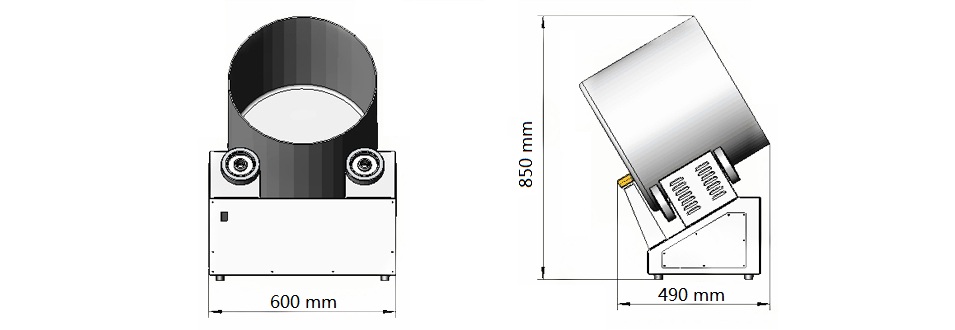
For applications involving dry seasoning or suitable coating ingredients, XFD's coater mixer tumbler for flavored popcorn is a non-heated rotating tumbler designed to distribute coatings. The product page describes a removable bowl and a coating process that takes approximately three minutes under the stated conditions. Buyers should verify whether its batch capacity and process are appropriate for their factory's target output.

Plan Cooling and Conveying Between Processing Stages
Conveying and cooling equipment often receive less attention than the popper or coating machine, but they can have a direct effect on line stability. The transfer system must move product at a suitable rate while limiting unnecessary drops, breakage, and accumulation.
Cooling requirements depend on the recipe and the process sequence. Some products need to cool before coating, while others may undergo a heated coating process followed by further cooling before packaging. The correct arrangement should be determined by the intended product and equipment configuration rather than by applying one sequence to every popcorn recipe.
When evaluating conveyors and cooling equipment, consider the following:
- Throughput: Can the transfer system handle the expected flow from the popping stage?
- Transfer height: Does the layout minimize unnecessary lifting and product drops?
- Cooling performance: Can the product reach the required condition before the next operation?
- Product protection: Are breakage and fines controlled during movement?
- Cleaning access: Can operators clean the equipment and remove accumulated product efficiently?
If the conveyor is too small, product may pile up and interrupt upstream processing. If the cooling stage is inadequate, the next process may have to wait or run under unsuitable conditions. These issues should be checked during line design and commissioning.
Match Packaging Speed to Saleable Product Output
Packaging is the final production stage, but it can become the main bottleneck if its capacity is lower than the output of the upstream equipment. A line may pop and coat popcorn efficiently yet struggle to complete orders because filling, weighing, sealing, or bag handling takes too long.
Packaging equipment should be chosen according to the product format and the required number of finished packs per minute. Retail snack bags, bulk foodservice packs, and microwave popcorn ingredient packs may require different machines and packaging processes.
Before purchasing a packaging machine, confirm:
- Bag type, dimensions, and packaging material.
- Target pack weight and filling accuracy requirements.
- Required bags per minute for the intended pack size.
- Sealing method and the quality checks required after sealing.
- How the machine receives product and handles short interruptions upstream.
For manufacturers producing microwave popcorn products, XFD offers a multifunctional microwave popcorn packing machine designed for three-in-one popcorn packs. This application differs from packing finished ready-to-eat popcorn, so buyers should match the equipment to the exact product format rather than assuming that one packaging machine suits every product.

Use a Simple Capacity Check to Find Bottlenecks
A practical way to assess a proposed production line is to compare the expected usable capacity of each stage. Do not rely only on the highest number shown in a product specification. Ask for the expected throughput under the actual recipe, operating schedule, and product format.
For example, a line may have the following illustrative capacities:
| Production stage | Illustrative usable capacity | What to check |
|---|---|---|
| Popping | 120 kg/h | Actual popped product output |
| Coating | 100 kg/h | Recipe, mixing time, and coating method |
| Cooling and transfer | 110 kg/h | Cooling time and transfer stability |
| Packaging | 90 kg/h equivalent | Pack size, filling speed, and downtime |
These figures are examples for explaining capacity matching, not XFD product specifications. In this example, packaging has the lowest usable capacity, so it is likely to limit the finished output to around 90 kg/h under the assumed conditions.
In real production, the result can also be affected by product loss, short stoppages, recipe changes, cleaning, and the time needed for quality checks. Ask the supplier to estimate the complete line's practical output and clarify how that output is measured.
Consider Product Changes, Cleaning, and Factory Layout
A balanced production line must work well during normal production and remain manageable when the factory changes flavors, cleans equipment, or performs maintenance. A setup that reaches its target output only when every machine runs continuously may not meet the factory's real daily production needs.
Factories producing multiple flavors should estimate the time required for recipe changes, cleaning, ingredient replenishment, and quality checks. If product changeovers are frequent, flexibility and easy access for cleaning may be just as important as nominal throughput.
The physical layout also matters. Leave appropriate space for operators, material movement, inspection, cleaning, and maintenance. Confirm electrical supply, equipment dimensions, transfer heights, and access to service components before finalizing the layout.
When reviewing a quotation, ask the supplier to identify which equipment is included, which connections or auxiliary systems are required, and which operations still depend on manual work. This helps prevent gaps between individual machine specifications and the actual needs of the complete production line.
What Should Buyers Request from an Equipment Supplier?
To obtain a suitable production-line proposal, buyers should provide enough information for the supplier to assess the whole process instead of quoting individual machines in isolation.
- Target finished-product output in kilograms per hour and per shift.
- Popcorn varieties, recipes, and coating requirements.
- Whether coating uses dry seasoning, liquid ingredients, or cooked caramel.
- Packaging format, bag dimensions, and required packing speed.
- Available factory floor space, electrical supply, and working hours.
- Expected product changes, cleaning frequency, and staffing arrangements.
- Required automation level, maintenance support, and future expansion plans.
Ask the supplier to confirm the proposed line's expected output for the intended product and explain any assumptions behind the estimate. If possible, request a process flow diagram showing how popping, transfer, cooling, coating, and packaging will be connected.
XFD provides industrial popcorn equipment and integrated production solutions for different manufacturing needs. Sharing the target output and product details at the beginning can help the supplier recommend a more appropriate configuration and reduce the risk of purchasing machines that do not work efficiently together.
Frequently Asked Questions
How do you match popcorn popping, coating, and packaging equipment?
Start with the required finished-product output and the recipe. Compare the practical capacity of each stage, including conveying and cooling, and identify the stage with the lowest usable throughput. Then confirm that the complete line can meet the target under normal operating conditions.
Should the popping machine have a higher capacity than the coating machine?
Not necessarily. Each stage should be sized to support the required production flow. A small capacity difference may be manageable with suitable buffering, but a persistent mismatch can cause product accumulation, idle time, or reduced line output.
How do I choose a coating machine for flavored popcorn?
Choose according to the recipe and coating method. Dry seasoning, liquid flavoring, and cooked caramel may require different equipment. Confirm the mixing action, batch or continuous capacity, cleaning needs, and expected output for the intended product.
Why can packaging become the bottleneck in popcorn production?
Packaging may have a lower usable throughput than the popping and coating stages. Bag size, filling accuracy, sealing speed, material handling, and short stoppages can all reduce packing output. Compare the expected finished-product flow with the packaging machine's practical performance.
Can a popcorn factory upgrade one stage without replacing the entire line?
Yes, if the existing equipment can be integrated with the new machine and the process remains compatible. Before upgrading, check connection points, transfer heights, control systems, available space, and whether the new equipment creates a bottleneck elsewhere.
What information is needed to request a balanced popcorn production line quotation?
Provide the target output, popcorn types, coating recipes, packaging format, factory layout, utilities, operating hours, and automation requirements. Ask the supplier to confirm the expected practical output of the complete line and identify the equipment and auxiliary systems included in the proposal.