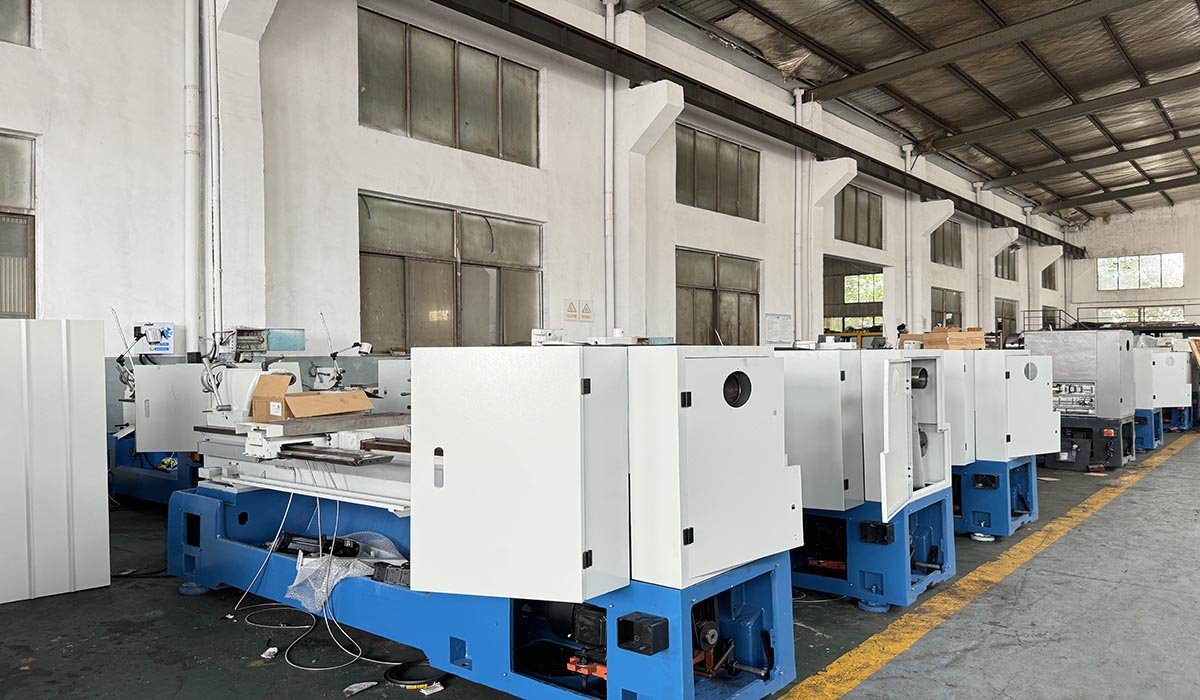
During lathe machining, workpieces rotate at high speeds and cutting tools move frequently; improper operation can easily lead to mechanical injuries, flying metal shavings and other safety incidents. It is therefore essential to strictly adhere to these safety operating procedures to ensure the safety of both personnel and equipment.
Before commencing work, personal protective equipment must be worn in accordance with regulations. Tight-fitting workwear must be worn with cuffs secured, and long hair must be tucked into a work cap. It is strictly prohibited to wear gloves, scarves or loose clothing whilst operating the machine, to prevent entanglement with rotating workpieces or the chuck. Simultaneously, inspect all parts of the machine tool to ensure they are in good working order. Check that components such as the spindle, guideways, chuck and tailstock are not loose, that the cutting tool and workpiece are securely clamped, and that the coolant level is sufficient. Only start the equipment once everything has been confirmed to be in order.
Workpiece clamping is a critical aspect of safe operation. Clamping must be carried out with the machine stopped. Use a three-jaw or four-jaw chuck to ensure a secure grip and accurate positioning, preventing the workpiece from flying out during high-speed rotation. When clamping long workpieces, use the tailstock centre to provide support to prevent bending or whipping. For irregularly shaped workpieces, ensure proper alignment and balancing to prevent vibration or dislodgement caused by eccentric rotation. Tools must be securely mounted with a reasonable protrusion length, and the tool tip must be aligned with the centre of the workpiece to prevent loosening or breakage.
Improper operation is strictly prohibited during machining. Whilst the machine is running, do not touch rotating workpieces, chucks or tools with your hands; do not reach in to clear chips or measure dimensions. Adjustments, measurements or cleaning must only be carried out after the machine has been stopped. Metal swarf must be cleared using specialised hooks or brushes; do not pull it away by hand or blow it away with your mouth to prevent cuts or burns. If abnormal vibrations, unusual noises or tool chipping occur during machining, stop the machine immediately to inspect and rectify the fault before resuming work.
Control cutting parameters appropriately; overloading the machine is strictly prohibited. Select suitable spindle speed, feed rate and cutting depth based on the workpiece material and tool type. Perform rough turning and finish turning in separate stages to avoid tool damage, workpiece deformation or machine overload caused by excessive speed or aggressive feed rates. When turning threads or long shaft-type parts, feed smoothly to prevent mis-threading, tool jamming or workpiece bending and fracture.
When using a coolant lubrication system, take care to prevent injury from coolant spray; adjust the nozzle direction to target the cutting area to ensure adequate cooling and lubrication. Remain focused on the task during operation; do not engage in idle conversation or leave your post. When multiple operators share a machine, clearly define roles; only one person may operate the machine at a time to prevent accidents caused by unintended actions.
Upon completion of work, the spindle must be switched off first; wait until the machine has come to a complete standstill before carrying out any final tasks. Promptly clear metal shavings and debris from the machine surface, guideways and worktable; wipe down the equipment and apply lubricant to the guideways, lead screws and other components to prevent rust and ensure proper maintenance. Switch off the power supply, organise tools, gauges and workpieces, and keep the work area clean and tidy.
Strict adherence to the lathe safety operating procedures not only effectively prevents workplace accidents but also extends the service life of the equipment and ensures machining quality; these are the fundamental guidelines that must be observed in machining operations.