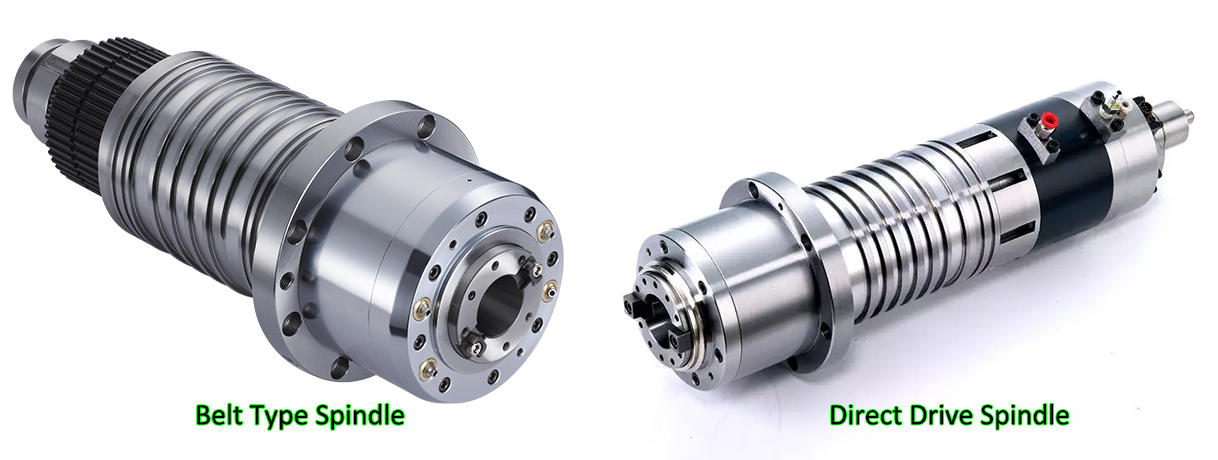
CNC machines play an important role in modern manufacturing by providing high levels of precision, consistency, and production efficiency. These machines are widely used across industries such as aerospace, automotive, medical, defense, electronics, energy, and general engineering for producing complex and accurate components.
The USA is home to many established CNC machine manufacturers that develop advanced machining centers, CNC lathes, milling machines, turning centers, multi-tasking machines, and automated manufacturing systems. However, selecting the right manufacturer can be challenging because companies differ in machine technology, product range, customization capabilities, automation solutions, and after-sales support.
In this guide, we highlight the top CNC machine manufacturers in the USA and provide an overview of their company background, manufacturing capabilities, product specialties, and key strengths. This comparison can help manufacturers, engineers, and purchasing teams identify reliable CNC machine suppliers based on their production requirements, machining applications, and long-term business needs.
Top 12 CNC Machine Manufacturers in The USA
Brand | Year Established | Headquarters | Features |
Fadal Engineering | 1973 | West Chicago, Illinois, USA | Machinist-focused CNC machining centers, 5-axis VMCs, CNC lathes, and controllers with an emphasis on ease of operation, reliable performance, and modern CNC technology. |
Fryer Machine Systems | 1982 | Patterson, New York, USA | American-made toolroom mills, CNC lathes, vertical and horizontal machining centers, 5-axis systems, and customized machines for specialized production needs. |
Machine Tool Builders (MTB) | 1995 | Machesney Park, Illinois, USA | CNC machine rebuilding, retrofitting, recontrol, gear hobbing, grinding, inspection, and modernization solutions designed to improve the performance and service life of existing equipment. |
CNC Yangsen | 2007 | Xiamen, Fujian, China | Wide selection of vertical, horizontal, gantry, drilling and tapping, engraving, milling, and boring machines with an emphasis on cost efficiency, customization, rigidity, and international technical support. |
Bourn & Koch | 1975 | Rockford, Illinois, USA | Precision gear manufacturing machinery, grinding equipment, vertical machining solutions, machine rebuilding, remanufacturing, and custom-engineered machine tool systems. |
United CNC Machining | 1979 | Auburn Hills, Michigan, USA | Advanced 3-, 4-, and 5-axis machining, multi-axis turning, precision grinding, wire EDM, custom tooling, and high-precision manufacturing for demanding aerospace and defense applications. |
Milltronics USA | 1973 | Indianapolis, Indiana, USA | Versatile CNC mills, turning centers, toolroom machines, bridge mills, 5-axis systems, and proprietary CNC controls featuring user-friendly programming for toolroom and production environments. |
CNC Manufacturing | 1960s | Temecula, California, USA | Aerospace-focused CNC milling, turning, forming, complex component production, CAD/CAM, in-house tooling, and production tracking for precision aircraft and defense components. |
Kent USA | 1979 | Tustin, California, USA | Broad range of surface grinders, CNC mills, knee mills, machining centers, lathes, turning equipment, and EDM machines backed by technical service and parts support. |
Northwood Machine | 1988 | Louisville, Kentucky, USA | Custom CNC equipment for stone, aerospace, composites, woodworking, and other materials, supported by modular machine designs, 5-axis capabilities, and application-specific engineering. |
Haas Automation | 1983 | Oxnard, California, USA | Extensive lineup of vertical and horizontal machining centers, CNC lathes, 5-axis machines, rotary products, and automation solutions manufactured at its large California facility. |
Tormach | 2001 | Madison, Wisconsin, USA | Accessible CNC mills, lathes, routers, automation systems, and accessories with upgradeable platforms, single-phase power compatibility, and solutions suited to prototyping and smaller manufacturing operations. |
1. Fadal Engineering
Type of Business: American manufacturer of CNC machining centers, CNC lathes, milling machines, and advanced CNC controllers
Location: West Chicago, Illinois, USA
Year Established: 1973
Manufacturer Introduction:
Fadal Engineering is an American CNC machine builder with more than 50 years of experience in CNC machining technology and manufacturing solutions.
The company specializes in CNC machining centers, vertical machining centers, 5-axis VMCs, CNC lathes, and CNC controllers designed for precision manufacturing applications.
Fadal machines are used across a wide range of industries, including automotive, aerospace, medical, semiconductor, musical instruments, die and mold, and general manufacturing.
The company is known for building machinist-focused CNC equipment that combines ease of use, reliable performance, affordable pricing, and modern engineering enhancements.
Business Scope:
- CNC Vertical Machining Centers
- 5-Axis CNC Machining Centers
- Classic VMC Series
- CNC Lathes
- CNC Controllers
- Milling and Boring Machines
Recommended Reason:
Fadal Engineering is a strong choice for manufacturers and machine shops looking for reliable, easy-to-use CNC machining equipment from an American CNC machine builder. Its combination of more than five decades of machining experience, machinist-focused machine design, modern CNC technology, and strong customer support makes Fadal suitable for both small machine shops and large manufacturing operations.

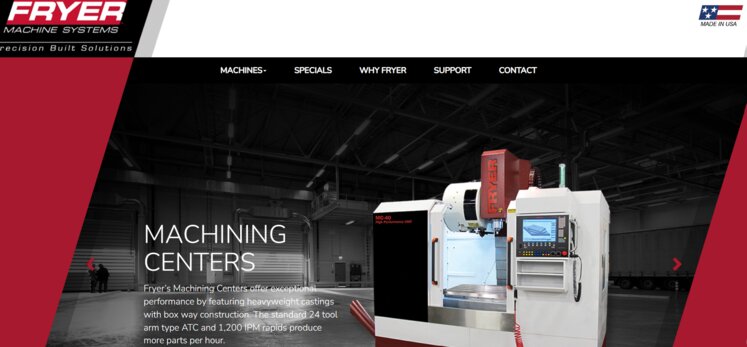
2. Fryer Machine Systems
Type of Business: American manufacturer of CNC machine tools, machining centers, toolroom machines, lathes, 5-axis machining centers, and customized manufacturing equipment
Location: Patterson, New York, USA
Year Established: 1982
Manufacturer Introduction:
Fryer Machine Systems is a family-owned American machine tool manufacturer founded in 1982 by Larry Fryer, initially specializing in CNC engineering and machine tool distribution.
It began manufacturing its own machines in 1994 with the introduction of the MB-14 Toolroom Bed Mill and has since expanded its portfolio to more than 50 standard machine models.
Fryer specializes in toolroom mills, CNC lathes, vertical and horizontal machining centers, traveling column machines, 5-axis machining centers, turning centers, and rotary tables.
The company is known for designing, engineering, and assembling its machines in the USA, while also offering customized equipment for demanding aerospace, automotive, die and mold, and general manufacturing applications.
Business Scope:
- Toolroom Mills
- Toolroom CNC Lathes
- Vertical Machining Centers
- Horizontal Machining Centers
- 5-Axis Machining Centers
- Traveling Column and Large-Capacity Machines
- Turning Centers and CNC Rotary Tables
Recommended Reason:
Fryer Machine Systems is a strong choice for manufacturers seeking American-made CNC equipment that combines precision, flexibility, and ease of operation. Its extensive range of more than 50 machine models allows customers to select equipment for toolroom work, production machining, complex 5-axis applications, and specialized manufacturing requirements.
3. Machine Tool Builders (MTB)
Type of Business: Gear machinery solutions provider specializing in CNC machine rebuilding, retrofitting, recontrol, service, custom machinery, and advanced gear manufacturing technologies
Location: Machesney Park, Illinois, USA
Year Established: 1995
Manufacturer Introduction:
MTB was established in 1995 as a machine tool service organization focused on providing engineering-based solutions for the gear manufacturing industry.
It specializes in rebuilding, retrofitting, CNC recontrol, repair, and modernization of existing gear manufacturing machines, helping manufacturers extend machine life capabilities.
MTB provides new gear machinery technologies, including gear hobbing, gear grinding, gear inspection, chamfering, and deburring equipment through its network of specialized machine.
The company is recognized for its engineering expertise in mechanical systems, electrical controls, CNC technology, and software development.
Business Scope:
- CNC Machine Rebuilding and Reconditioning
- CNC Retrofits and Recontrol Systems
- Gear Hobbing Machines
- Gear Grinding Machines and Solutions
- Gear Inspection and Measuring Equipment
- Gear Chamfering and Deburring Machines
Recommended Reason:
Machine Tool Builders is a strong choice for gear manufacturers that need to modernize existing equipment or implement specialized gear production technologies. Its expertise in CNC retrofits, machine rebuilding, controls, software, and gear manufacturing applications can help manufacturers extend the useful life of older machines while improving accuracy, productivity, and reliability.
4. CNC Yangsen
Type of Business: Chinese manufacturer of CNC machine tools, machining centers, CNC milling machines, drilling and tapping centers, gantry machining centers, horizontal machining centers, boring machines, and customized CNC machining solutions
Location: Xiamen, Fujian Province, China
Year Established: 2007
Manufacturer Introduction:
Yangsen CNC Machine Factory is a Chinese CNC machine tool manufacturer based in Xiamen, Fujian Province, with more than 20 years of experience in the CNC machine industry.
The company states that it operates more than 100,000 square meters of manufacturing facilities, has more than 700 employees, an annual production capacity of more than 5,000 machines.
Yangsen focuses on providing cost-effective CNC machine tools while maintaining precision, rigidity, reliability, customization capabilities, and technical support.
The company also supports international distributors and customers with machine selection, technical consultation, machining solutions, installation guidance, spare parts, training, and after-sales service.
Business Scope:
- CNC Vertical Machining Centers
- CNC Horizontal Machining Centers
- CNC Gantry Machining Centers
- CNC Drilling and Tapping Centers
- Engraving and Milling Machines
- CNC Horizontal Boring Machines
Recommended Reason:
Yangsen CNC Machine Factory is a strong choice for manufacturers, machine shops, distributors, and industrial buyers seeking cost-effective CNC machining equipment with a broad product range and customization capabilities. Its product range covers applications from precision mold manufacturing and automotive components to semiconductor, medical, bathroom products, and general machinery manufacturing.
5. Bourn & Koch
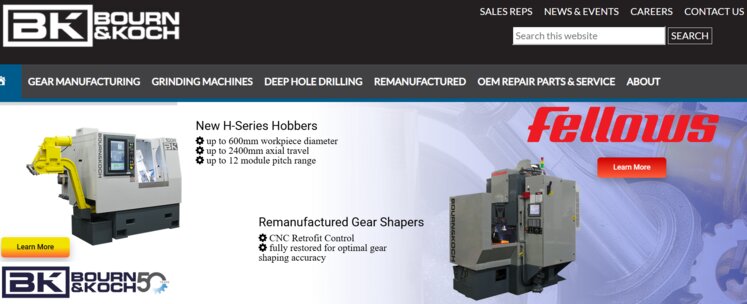
Type of Business: Manufacturer of precision automated machine tools, gear manufacturing equipment, grinding machines, and machine tool remanufacturing solutions
Location: Rockford, Illinois, USA
Year Established: 1975
Manufacturer Introduction:
Bourn & Koch is an American machine tool manufacturer founded in 1975 and based in Rockford, Illinois, with more than 50 years of experience in cnc machine manufacturing.
The company specializes in gear manufacturing machinery, precision grinding machines, vertical grinders, and customized automated machine tool solutions for demanding manufacturing applications.
Its equipment and services support industries requiring high-precision machining, gear production, grinding, milling, turning, and specialized manufacturing solutions.
It is recognized for American-made machines, custom engineering capabilities, machine rebuilding and retrofit expertise, and ability to remanufacture legacy equipment.
Business Scope:
- Gear Manufacturing Machinery
- Horizontal Gear Hobbers and Gear Shapers
- Precision Grinding Machines
- Vertical Grinding, Milling, and Turning Machines
- Machine Tool Repair Parts and Field Service
- Machine Rebuilding, Retrofitting, and Remanufacturing
Recommended Reason:
Bourn & Koch is a strong choice for manufacturers seeking American-made gear manufacturing and precision grinding solutions. Its combination of custom engineering, machine rebuilding expertise, and advanced machining capabilities makes it suitable for demanding manufacturing applications.
6. United CNC Machining
Type of Business: American manufacturer and precision CNC machining service provider specializing in 5-axis machining, multi-axis turning, grinding, EDM, and limited-production manufacturing
Location: Auburn Hills, Michigan, USA
Year Established: 1979
Manufacturer Introduction:
United CNC Machining is an American precision manufacturer founded in 1979 and based in Auburn Hills, Michigan, with more than 45 years of experience in advanced CNC machining and manufacturing.
The company specializes in 3-, 4-, and 5-axis CNC machining, multi-axis turning, precision grinding, tooling, fixtures, and prototype-to-limited-production manufacturing solutions.
United CNC Machining serves demanding industries including aerospace, space, defense, naval, energy, and other high-performance applications requiring complex geometries, tight tolerances, and precision finishes.
The company is recognized for its advanced CNC work centers, expertise in titanium, aluminum, Inconel, and high-nickel alloys, along with AS9100D, ITAR, and CMMC certifications.
Business Scope:
- 5-Axis CNC Machining
- Multi-Axis CNC Turning
- Precision CNC Grinding
- Wire EDM and Advanced Inspection
- Prototype and Limited-Production Manufacturing
- Custom Tooling, Fixtures, and Gauges
Recommended Reason:
United CNC Machining is a strong choice for manufacturers requiring high-precision CNC machining for complex and demanding components. Its advanced 5-axis capabilities, exotic alloy expertise, extensive equipment capacity, and certified quality systems make it well suited for aerospace, defense, space, and other high-performance applications.
7. Milltronics USA
Type of Business: American manufacturer of CNC milling machines, CNC turning machines, machining centers, bridge mills, and proprietary CNC control systems
Location: Indianapolis, Indiana, USA
Year Established: 1973
Manufacturer Introduction:
Milltronics was founded in 1973 and has more than 50 years of experience developing CNC controls, milling machines, turning centers, and machining solutions for precision manufacturing.
The company specializes in vertical machining centers, toolroom mills, CNC lathes, turning centers, bridge mills, 5-axis machining centers, and proprietary CNC control technology.
Their machines are designed for both toolroom and production environments, serving manufacturers and machine shops that require flexible machining capabilities, user-friendly programming.
The company is recognized for its American-built CNC machines, conversational programming technology, customizable machine configurations, and more than 14,000 machines installed worldwide.
Business Scope:
- CNC Vertical Machining Centers
- 5-Axis Machining Centers
- Toolroom Mills
- CNC Turning Centers and Lathes
- Bridge Mills
- CNC Control Systems
Recommended Reason:
Milltronics is a strong choice for manufacturers seeking versatile CNC milling and turning equipment with user-friendly control technology. Its extensive machine range, proprietary CNC controls, and more than five decades of experience make it suitable for both toolroom and production machining applications.
8. CNC Manufacturing
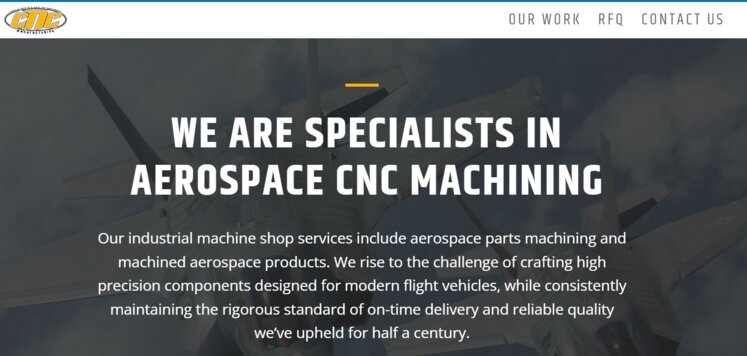
Type of Business: American manufacturer and precision CNC machining service provider specializing in aerospace components, CNC milling, turning, forming, and complex machined parts
Location: Temecula, California, USA
Year Established: 1960s
Manufacturer Introduction:
CNC Manufacturing is an American family-owned precision machine shop with more than 30 years of aerospace industry experience and a facility in Temecula, California.
The company specializes in CNC milling, turning, forming, and complex machining of aerospace components using materials such as titanium, aluminum, stainless steel, alloys, brass, copper, and plastics.
Its manufacturing capabilities support aerospace, military, automotive, and custom applications, with experience producing structural and precision components for aircraft such as the F-18, KC-135, Global Hawk, F-16, C-17, F-15, A-10, and other platforms.
The company is recognized for its aerospace machining expertise, ISO 9001:2015 quality system, CAD/CAM capabilities, in-house tooling, and real-time Simpletrak® production tracking system.
Business Scope:
- Aerospace CNC Machining
- CNC Milling and Turning
- Aircraft Structural Components
- Precision Forming and Complex Parts
- In-House Tooling and CAD/CAM
- Prototype and Custom Manufacturing
Recommended Reason:
CNC Manufacturing is a strong choice for customers seeking precision aerospace machining and complex component manufacturing. Its experience with demanding aerospace materials, aircraft components, quality systems, and production tracking capabilities makes it suitable for high-precision manufacturing applications.
9. Kent USA
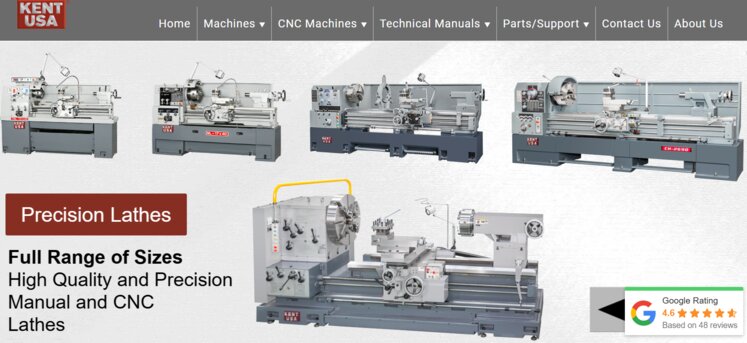
Type of Business: American manufacturer and supplier of precision machine tools, CNC machining centers, grinders, mills, lathes, EDMs, and turning equipment
Location: Tustin, California, USA
Year Established: 1979
Manufacturer Introduction:
Kent USA is an American machine tool manufacturer founded in 1979 with more than 45 years of experience providing precision machinery and manufacturing solutions.
The company specializes in surface grinders, milling machines, CNC knee mills, vertical and horizontal machining centers, lathes, CNC turning machines, and EDM equipment.
Kent USA serves machine shops and manufacturing facilities of different sizes, providing machines designed for grinding, milling, turning, and precision metalworking applications.
The company is recognized for its broad machine portfolio, competitive equipment, strong after-sales support, technical service, and global distribution network.
Business Scope:
- Surface Grinders
- CNC Milling Machines and Knee Mills
- CNC Vertical and Horizontal Machining Centers
- CNC Lathes and Turning Centers
- EDM Machines
- Radial Arm Drills and Bandsaws
Recommended Reason:
Kent USA is a strong choice for machine shops seeking reliable and versatile machine tools with comprehensive service support. Its wide range of CNC and conventional equipment, parts availability, technical assistance, and more than four decades of industry experience make it suitable for diverse manufacturing requirements.
10. Northwood Machine
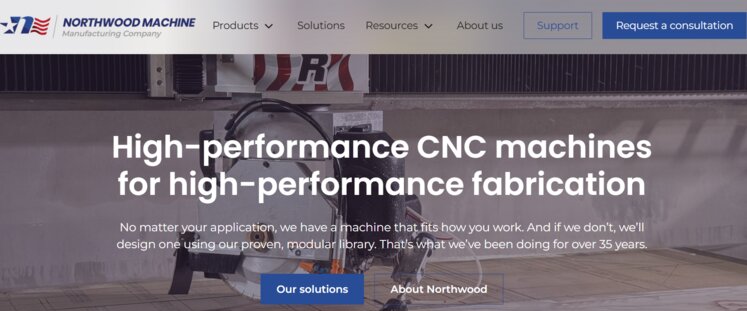
Type of Business: American manufacturer of custom CNC machines and advanced machining solutions for stone fabrication, aerospace, composites, woodworking, and other advanced material applications
Location: Louisville, Kentucky, USA
Year Established: 1988
Manufacturer Introduction:
Northwood Machine is an American CNC machine manufacturer founded in 1988 with more than 35 years of experience developing advanced and customized manufacturing equipment.
The company specializes in CNC machines for stone fabrication, aerospace, composites, upholstery, wooden furniture, and other advanced material applications, with solutions designed around specific customer requirements.
Northwood machines are used for applications ranging from stone countertops and furniture components to aerospace and composite parts.
The company is recognized for its modular machine designs, in-house manufacturing, lifetime technical support, and ability to develop customized CNC solutions for demanding applications.
Business Scope:
- Custom CNC Machines
- Stone Fabrication CNC Machines
- Aerospace and Advanced Materials Machines
- 5-Axis CNC Machines
- CNC Routing and Cutting Systems
Recommended Reason:
Northwood Machine is a strong choice for manufacturers seeking customized CNC equipment designed around specific materials and production requirements. Its modular engineering approach, extensive industry experience, and long-term technical support make it suitable for complex fabrication applications.
11. Haas Automation
Type of Business: American manufacturer of CNC machine tools, vertical and horizontal machining centers, CNC lathes, rotary products, and 5-axis machining systems
Location: Oxnard, California, USA
Year Established: 1983
Manufacturer Introduction:
Haas was founded in 1983 by Gene Haas and has grown into one of the largest machine tool builders in the Western world, with more than four decades of manufacturing experience.
The company specializes in CNC vertical machining centers, horizontal machining centers, CNC lathes, rotary tables, 5-axis machines, and specialized machining equipment.
Haas machines are manufactured at the company's large production facility in Oxnard, California, and are widely used by machine shops and manufacturers requiring reliable and cost-effective CNC machining solutions.
The company is recognized for its in-house manufacturing capabilities, broad CNC product range, competitive machine pricing, extensive service network, and focus on delivering reliable machine tools.
Business Scope:
- CNC Vertical Machining Centers
- CNC Horizontal Machining Centers
- CNC Lathes
- 5-Axis CNC Machines
- Rotary Tables and Indexers
- CNC Automation and Accessories
Recommended Reason:
Haas Automation is a strong choice for manufacturers seeking reliable CNC machine tools with a broad range of configurations and competitive performance. Its extensive product portfolio, in-house manufacturing capabilities, global service network, and more than four decades of industry experience make it suitable for both machine shops and production environments.
12. Tormach
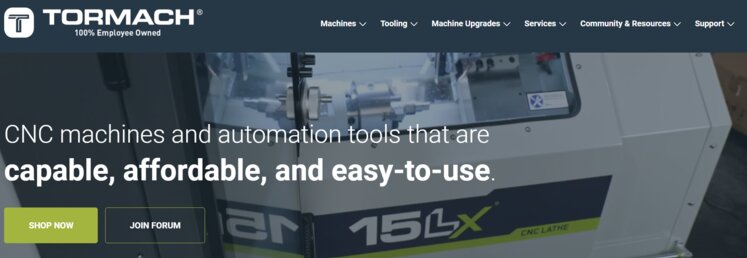
Type of Business: American manufacturer of CNC mills, CNC lathes, CNC routers, automation systems, and CNC control software
Location: Madison, Wisconsin, USA
Year Established: 2001
Manufacturer Introduction:
Tormach is an American CNC machine manufacturer founded in 2001, with more than two decades of experience developing affordable and accessible CNC machining solutions.
The company specializes in CNC mills, CNC lathes, CNC routers, automation equipment, and designed for makers, prototyping operations, hobbyists, and small manufacturing businesses.
Tormach machines are designed to provide precision machining capabilities without requiring expensive industrial three-phase power.
The company is recognized for its upgradeable and self-serviceable CNC machines, US-based technical support, which provides an intuitive CNC programming and control experience.
Business Scope:
- CNC Mills
- CNC Lathes
- CNC Routers
- CNC Automation Systems
- CNC Mill Accessories and 4th-Axis Solutions
- Automatic Tool Changers
- Educational and Prototyping CNC Solutions
Recommended Reason:
Tormach is a strong choice for manufacturers, prototyping businesses, educational institutions, and machine shops seeking capable and affordable CNC equipment that can grow with their production requirements. Its single-phase power compatibility, upgradeable machine platforms, easy-to-use, and US-based technical support make Tormach suitable for users looking to establish or expand a flexible CNC machining operation.
FAQs
1. What are the main types of CNC machines offered by leading manufacturers?
Leading CNC machine manufacturers offer different equipment for specific machining requirements, including vertical machining centers, horizontal machining centers, CNC lathes, turning centers, gantry machines, 5-axis machining centers, drilling and tapping centers, grinding machines, and boring machines. The selection depends on the part geometry, material, required accuracy, and production volume.
2. Which CNC manufacturers are suitable for aerospace machining?
United CNC Machining and CNC Manufacturing have specific experience with aerospace components and demanding materials such as titanium and high-nickel alloys. Machine builders including Fadal Engineering and Fryer Machine Systems also serve aerospace applications with their machining centers. CNC Yangsen provides CNC machining equipment suitable for precision manufacturing applications used in aerospace and other advanced industries.
3. What is the difference between a CNC machine manufacturer and a CNC machining service provider?
A CNC machine manufacturer develops and produces the machine tools used for machining, such as mills, lathes, machining centers, and 5-axis systems. A CNC machining service provider uses CNC equipment to manufacture parts for customers. Some companies can operate in both areas by manufacturing equipment while also providing specialized machining or engineering services.
4. What factors should be considered when selecting a CNC machine manufacturer?
Important factors include machine type, number of axes, spindle capability, machining envelope, accuracy, rigidity, material compatibility, automation requirements, production volume, control system, technical support, spare-parts availability, and total operating cost. Buyers should also consider whether the manufacturer has experience with their specific machining application.
5. What factors determine the quality of a CNC machine?
CNC machine quality depends on several factors, including machine rigidity, positioning accuracy, repeatability, spindle performance, thermal stability, control system, and the quality of components such as guideways, ball screws, and bearings. These factors directly affect machining accuracy, surface finish, tool life, and long-term production stability.
6. How do I choose the right CNC machine for my production needs?
The right CNC machine should be selected according to the material being machined, part complexity, required tolerances, production volume, workpiece size, and desired automation level. Spindle power, work envelope, tooling requirements, and long-term operating costs should also be evaluated before purchase.
Conclusion
Choosing the right CNC machine manufacturer is important for achieving machining accuracy, consistent production, and long-term manufacturing efficiency. The manufacturers covered different capabilities, from 3-axis and 5-axis machining centers to CNC lathes, turning centers, gantry machines, grinding equipment, and specialized machining solutions.
With a focus on precision, rigidity, customization, and production performance, CNC Yangsen can provide CNC solutions tailored to different industrial machining requirements.
Contact CNC Yangsen today to discuss your machining requirements and explore a suitable CNC machine solution for your application.