Hygienic processing facilities in food, beverage, dairy, and nutraceutical manufacturing depend heavily on the integrity of their flexible transfer lines. A single material failure can result in batch contamination, unexpected downtime, regulatory penalties, and significant brand damage. Among the available elastomer options, the food grade silicone hose remains the benchmark for critical transfer points where purity, thermal stability, and cleanability are non-negotiable.
Designing or upgrading an automated processing line requires an understanding of how raw silicone polymer formulations, reinforcement structures, and curing systems interact under real-world operating conditions. Selecting flexible hoses is not simply a matter of matching inner diameters; it requires evaluating chemical compatibility, clean-in-place (CIP) regimens, mechanical stress, and international regulatory frameworks.
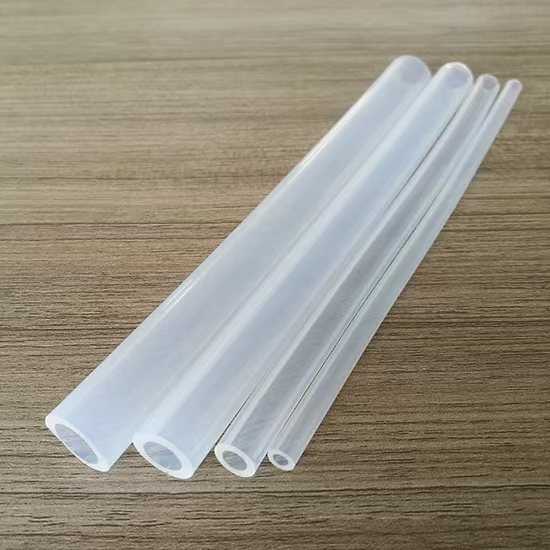
1. Material Architecture: Why Silicone Outperforms Conventional Elastomers
Silicone differs fundamentally from organic rubbers such as EPDM, NBR (nitrile), or natural rubber. Its backbone consists of alternating silicon and oxygen atoms (the siloxane bond, Si–O–Si) rather than carbon-to-carbon bonds. This molecular backbone possesses a significantly higher bond energy, giving silicone exceptional resistance to heat, ozone, UV radiation, and oxidation.
In sanitary food and beverage processing, this molecular stability translates into distinct operational advantages:
-
Organoleptic Neutrality: Silicone does not impart odor, taste, or color to the conveyed medium. This characteristic makes it suitable for dairy, wine, distilled spirits, baby formula, and flavor concentrates.
-
Thermal Endurance: Standard food grade silicone formulations operate reliably across a broad temperature range from -60°C to +200°C (-76°F to +392°F), with specialized high-temperature grades withstanding intermittent exposure up to +250°C (+482°F).
-
Surface Smoothness and Low Extractables: The non-adherent, low-energy internal surface of extruded silicone limits bacterial adhesion, biofilm formation, and protein buildup, simplifying fluid dynamics and sanitization.
When sourcing fluid-handling components from specialized manufacturers like Rainbow Manufacturing, engineers typically evaluate specific structural variations based on pressure profiles and physical routing requirements.
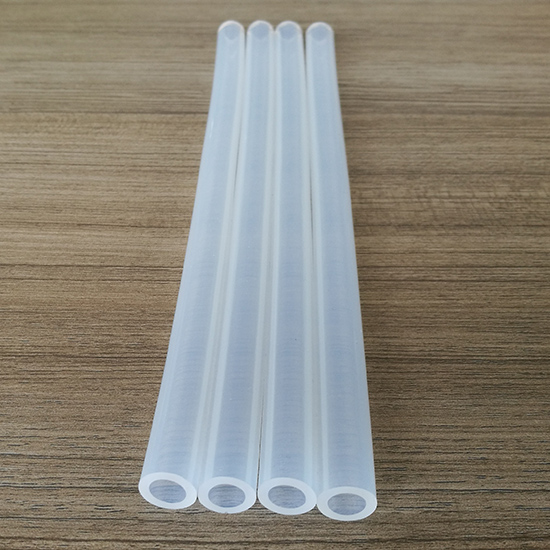
2. Platinum-Cured vs. Peroxide-Cured Systems
The curing mechanism used during cross-linking determines whether a hose is suitable for sensitive food or bioprocessing applications:
| Parameter | Platinum-Cured Silicone | Peroxide-Cured Silicone |
|---|---|---|
| By-products | Zero by-products | Leaves volatile organic acids |
| Taste / Odor Transfer | Completely neutral | Risk of residual chemical taint |
| Surface Finish | Ultra-smooth, non-tacky | Slightly less lubricious |
| Clarity / Translucency | High clarity | Translucent to slightly cloudy |
| Resistance to Yellowing | High resistance | Prone to yellowing with heat/CIP |
| Primary Application | Dairy, spirits, bio-pharm, infant | General industrial food handling |
Peroxide cross-linking relies on organic peroxides that generate breakdown products—primarily benzoic acid derivatives—which can leach into process media unless thoroughly post-cured at elevated temperatures for extended cycles. Even after post-curing, trace residues can create taste taints in delicate media like unflavored milk, craft beer, or mineral water.